Mixnet packet mixing represents a cornerstone of modern privacy infrastructure, enabling secure, anonymous communication across decentralized networks. At its core, this technique involves the systematic reordering, encapsulation, and forwarding of data packets to obscure their origin, destination, and content. Unlike traditional routing, which often reveals metadata through predictable paths, mixnet packet mixing introduces deliberate delays, layered encryption, and randomized traversal patterns that frustrate traffic analysis and surveillance efforts. The fundamental goal is to decouple the sender from the receiver, ensuring that no single node possesses sufficient information to deanonymize the communication stream.
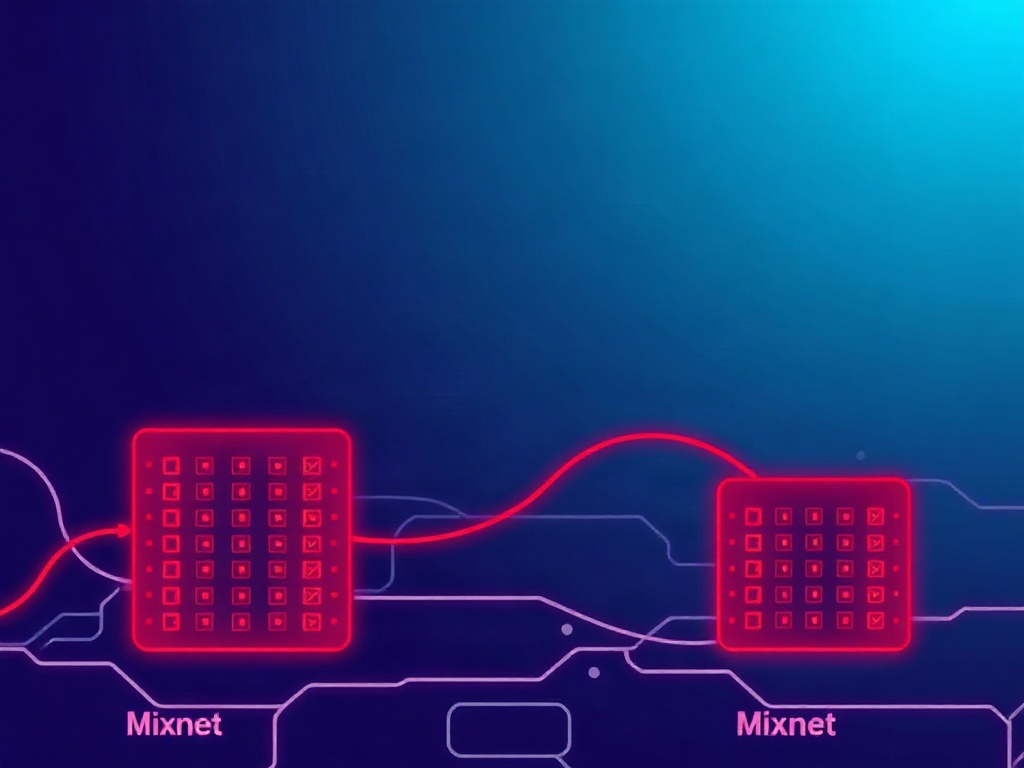
The concept emerged from early cryptographic research in the 1980s, but has evolved significantly with advances in computational power and threat modeling. Modern mixnet packet mixing leverages sophisticated algorithms, including deterministic shuffling, re-encryption, and zero-knowledge proofs, to provide verifiable privacy without compromising throughput. In practice, the process begins when a client encrypts a packet multiple times—once for each mixnode in the path. Each mixnode strips away one layer of encryption, reorders the packet relative to others in its batch, and forwards it to the next node. By the time the packet reaches its final destination, the original ordering is lost, and the trail of metadata is effectively broken.
Foundations of Mixnet Packet Mixing
The Evolution of Mix Networks
The journey of mixnet packet mixing began with David Chaum’s pioneering work on mix networks, which introduced the idea of mixing messages to prevent end-to-end traffic analysis. Early implementations relied on trusted third parties and batch processing, which limited scalability and introduced single points of failure. Over decades, the community refined these designs, incorporating cryptographic advances such as re-encryption mixes, where each node re-encrypts the packet with its own public key, and shuffle mixes, which reorder packets without decrypting them. These innovations paved the way for today’s decentralized mixnet ecosystems, where trust is distributed across many independent operators.
Core Principles of Packet Shuffling
At the heart of mixnet packet mixing lies the principle of packet shuffling. When a mixnode receives a batch of packets from multiple clients, it sorts them according to a random permutation before forwarding them to the next hop. This simple yet powerful mechanism ensures that the relationship between incoming and outgoing packet sequences is statistically indistinguishable from random. Additional principles include timing obfuscation, where mixnodes introduce variable delays to prevent timing correlation attacks, and size obfuscation, which pads packets to uniform sizes or adds random dummy data to mask the true volume of information being transmitted.
Technical Workflow of Mixnet Packet Mixing
Step-by-Step Packet Journey
A typical mixnet packet mixing session follows a multi-hop path. Consider a client wishing to send a confidential message. The client first encrypts the message in layers: the outermost layer is destined for the first mixnode, the next for the second, and so on. Once encrypted, the packet is injected into the network. The first mixnode receives the packet along with many others forming a batch. It strips its layer of encryption, verifies the packet’s integrity, applies a random shuffle to the batch, and forwards the reordered set to the second mixnode. This process repeats at each subsequent hop. By the time the packet exits the final mixnode, the original sender-receiver link is mathematically severed, as each node only knows its immediate predecessor and successor.
Timing and Size Obfuscation Techniques
Beyond shuffling, effective mixnet packet mixing incorporates timing and size obfuscation to thwart advanced adversaries. Timing obfuscation involves introducing deliberate delays or jitter at each mixnode, making it difficult for an observer to correlate the arrival time at the sender’s end with the departure time at the receiver’s end. Size obfuscation, on the other hand, standardizes packet sizes or adds padding to blend individual packets into a uniform stream. Some advanced mixnets also employ "cover traffic," where benign data packets are continuously injected into the network to maintain a constant flow and further obscure genuine communication patterns.
The btcmixer_en Ecosystem and Mixnet Integration
How btcmixer_en Leverages Mixnet Protocols
Within the broader landscape of privacy-focused technologies, btcmixer_en has emerged as a notable participant that integrates mixnet packet mixing principles into its service offering. The btcmixer_en platform utilizes custom mixnet architectures to enhance transaction privacy for its users, ensuring that financial metadata remains decoupled from identifiable information. By implementing a network of volunteer-operated mixnodes, btcmixer_en distributes trust and reduces the risk of centralized surveillance. The platform also provides operators with open-source tools for node deployment, performance monitoring, and security hardening, fostering a community-driven approach to network resilience.
Community-Driven Development and Security Audits
The sustainability of any mixnet packet mixing deployment hinges on rigorous security practices, and btcmixer_en exemplifies this through its commitment to community audits and open-code transparency. Regular third-party security assessments evaluate the cryptographic implementations, node configurations, and resistance to known attack vectors such as Sybil attacks, eclipse attacks, and end-to-end traffic correlation. Community contributors review code changes, propose improvements, and document emerging threats, creating a feedback loop that strengthens the entire ecosystem. This collaborative model not only improves the reliability of mixnet packet mixing but also accelerates the identification and patching of vulnerabilities before they can be exploited.
Challenges, Countermeasures, and Best Practices
Mitigating Traffic Analysis Attacks
Despite its strengths, mixnet packet mixing faces persistent challenges from sophisticated traffic analysis adversaries. Adversaries with vantage points at multiple network layers can attempt to correlate timing, packet sizes, and frequency patterns to re-identify senders or receivers. To counter this, modern mixnet deployments employ adaptive padding schemes, where packet sizes vary within a plausible range rather than adhering to a strict uniform distribution, making statistical analysis more difficult. Additionally, dynamic path selection—where the route through the mixnet changes for each packet or session—prevents adversaries from building reliable correlation models based on fixed routes.
Operational Security for Mixnode Operators
The health of a mixnet packet mixing network depends heavily on the operational security (OpSec) of its constituent mixnodes. Node operators must adhere to best practices such as running hardened operating systems, disabling unnecessary services, and employing firewall rules that restrict inbound connections to only those required for mixnet participation. Regular software updates are critical, as they patch cryptographic libraries and fix potential exploits. Furthermore, operators should implement rate limiting and connection throttling to prevent denial-of-service attacks from overwhelming individual nodes and degrading the overall mixing quality. Logging policies should be designed to retain minimal data, ideally none, to ensure that even if a node is compromised, the information available to an attacker is limited.
The Future of Mixnet Packet Mixing in Decentralized Privacy
Emerging Cryptographic Constructions
The next generation of mixnet packet mixing is poised to incorporate cutting-edge cryptographic constructions that promise even stronger privacy guarantees while improving efficiency. Techniques such as homomorphic encryption allow computations on encrypted data without decryption, potentially enabling mixnodes to perform shuffling and routing operations without ever seeing packet contents. Zero-knowledge proofs can provide verifiable assurances that mixnodes are behaving honestly, rewarding compliant behavior and slashing malicious actors without revealing sensitive network topology. Additionally, research into post-quantum cryptography aims to future-proof mixnet infrastructures against the looming threat of quantum computers, which could render current elliptic-curve-based encryption obsolete.
Integration with Decentralized Finance and Web3
As the decentralized finance (DeFi) and Web3 ecosystems expand, mixnet packet mixing is finding new relevance in protecting user privacy on-chain. Anonymous transaction routing, private smart contract interactions, and confidential token transfers all benefit from the obfuscation properties of mixnets. Projects within the btcmixer_en niche and beyond are exploring bridges that connect off-chain mixnet layers with on-chain privacy protocols, creating hybrid systems that leverage the best of both worlds. This convergence could lead to a new standard where privacy is not an afterthought but a foundational layer of every decentralized application, ensuring that users can transact, communicate, and interact without exposing their digital footprints.
Summary
Mixnet packet mixing stands as a vital technology in the ongoing quest for digital privacy and anonymity. By systematically obscuring packet metadata through shuffling, encryption, and obfuscation techniques, mixnets provide a robust defense against traffic analysis and surveillance. The integration of these principles into platforms like btcmixer_en demonstrates their practical applicability and the growing demand for decentralized, trustless privacy solutions. While challenges such as traffic analysis and operational security persist, continuous advancements in cryptography and community-driven best practices are strengthening the resilience of mixnet ecosystems. As we move toward an increasingly interconnected and data-driven world, mastering mixnet packet mixing will be essential for safeguarding freedom of expression, financial privacy, and secure communication across the globe.
- Key Takeaway: Mixnet packet mixing relies on layered encryption, random shuffling, and timing/size obfuscation to protect user anonymity.
- btcmixer_en Role: The platform exemplifies how mixnet principles can be applied in real-world privacy services, supported by community audits and open-source development.
- Future Outlook: Emerging cryptographic techniques and integration with Web3 promise to expand the capabilities and reach of mixnet packet mixing in the years ahead.
This article was crafted to provide a comprehensive, SEO-friendly overview of mixnet packet mixing, tailored for readers and practitioners within the btcmixer_en niche and the broader privacy technology community.
mixnet packet mixing: A Foundational Layer for Privacy in Decentralized Finance
As Robert Hayes, a technology researcher specializing in decentralized finance and Web3 infrastructure, I view mixnet packet mixing not merely as a technical curiosity but as a potentially transformative layer for privacy-preserving transactions on-chain. In the current DeFi landscape, where transparent ledgers expose wallet flows, trading patterns, and liquidity movements, the ability to obfuscate packet-level metadata offers a compelling countermeasure. Mixnet packet mixing, by design, routes data through multiple independent nodes that shuffle and re-encrypt payloads, effectively breaking the correlation between sender and receiver addresses—a capability that could significantly reduce front-running, sandwich attacks, and indiscriminate surveillance of protocol users.
From a practical standpoint, integrating mixnet principles into existing Web3 stacks requires careful trade-offs between latency, gas costs, and security guarantees. While pure on-chain mixing solutions like Tornado Cash have faced regulatory headwinds, a mixnet-inspired approach operating at the network or application layer could provide probabilistic anonymity without permanently locking liquidity into immutable contracts. For developers and risk managers, the key insight is that mixnet packet mixing can be layered as an off-chain or side-chain service, enabling users to submit signed intent transactions that are only revealed after a mixing period, thereby preserving competitive strategy while mitigating extractable value (MEV) extraction vectors.
Looking ahead, the convergence of mixnet architectures with zero-knowledge proof systems presents the most promising pathway forward for privacy-centric DeFi. By combining the metadata obfuscation of mixnet packet mixing with zk-SNARK validity proofs, protocols can achieve verifiable privacy—where the fact of a transaction is cryptographically guaranteed without exposing its contents or participants. As governance frameworks evolve and the industry seeks sustainable models for user confidentiality, I believe mixnet-inspired designs will become a standard consideration in the architecture of next-generation decentralized exchanges, lending markets, and cross-chain interoperability layers.