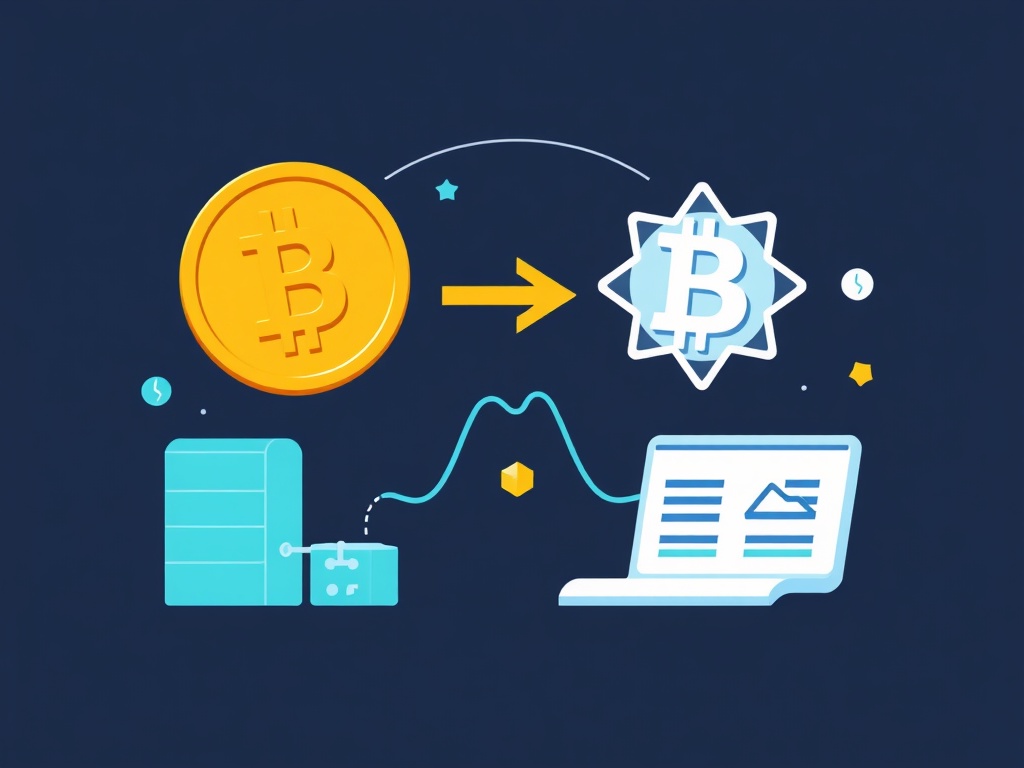
The cryptocurrency landscape is constantly evolving, with new technologies and approaches emerging to address existing limitations. One such innovation gaining traction is the atomic swap exchange. This technology promises a truly decentralized and trustless way to trade cryptocurrencies directly, without relying on centralized exchanges. This article will delve into the intricacies of atomic swaps, exploring their mechanics, benefits, challenges, and potential impact on the future of cryptocurrency trading, particularly within the context of privacy-focused solutions like those offered by services exploring enhanced anonymity.
What is an Atomic Swap and Why Does it Matter?
At its core, an atomic swap is a peer-to-peer (P2P) exchange of one cryptocurrency for another, occurring directly between two parties without the need for an intermediary like a traditional cryptocurrency exchange. The term "atomic" refers to the "all-or-nothing" nature of the transaction. Either both parties receive the agreed-upon assets, or the transaction fails entirely, and no assets are exchanged. This eliminates the risk of one party receiving funds while the other doesn't, a common concern with centralized exchanges.
The Problem with Centralized Exchanges
Centralized exchanges, while convenient, present several drawbacks:
- Security Risks: They are prime targets for hackers due to the large amounts of cryptocurrency they hold.
- Custodial Risk: Users relinquish control of their funds to the exchange, making them vulnerable to exchange insolvency or malicious actions.
- Privacy Concerns: Exchanges typically require KYC (Know Your Customer) verification, compromising user privacy.
- Censorship and Control: Exchanges can freeze accounts or restrict trading based on various factors.
How Atomic Swaps Work: Hashed Timelock Contracts (HTLCs)
The most common technology enabling atomic swaps is Hashed Timelock Contracts (HTLCs). Here's a simplified breakdown:
- Secret Generation: One party (let's call them Alice) generates a random secret and calculates its hash.
- HTLC Creation (Alice): Alice creates an HTLC on the first blockchain (e.g., Bitcoin) that locks her Bitcoin and requires the other party (Bob) to provide the secret's hash to claim them. This contract also includes a timelock – a deadline after which Alice can reclaim her Bitcoin if Bob doesn't fulfill the conditions.
- HTLC Creation (Bob): Bob, upon seeing Alice's HTLC, creates a similar HTLC on the second blockchain (e.g., Litecoin) that locks his Litecoin and requires Alice to provide the same secret's hash to claim them. Bob's HTLC also has a timelock.
- Secret Reveal: Alice reveals the secret to Bob to claim his Litecoin.
- Claiming Funds: Bob uses the revealed secret to claim Alice's Bitcoin from her HTLC.
- Transaction Completion: Both transactions are completed successfully, or both fail if the timelocks expire.
The timelocks are crucial. They ensure that if one party doesn't fulfill their end of the bargain within the specified timeframe, the other party can reclaim their funds.
Benefits of Utilizing an Atomic Swap Exchange
The advantages of atomic swap exchange are numerous and contribute to a more robust and user-centric cryptocurrency ecosystem:
- Decentralization: Eliminates reliance on centralized intermediaries, reducing single points of failure and censorship.
- Trustlessness: No need to trust a third party to hold funds or execute the trade. The smart contracts enforce the agreement.
- Enhanced Security: Reduces the risk of hacking and theft compared to centralized exchanges.
- Improved Privacy: Can be conducted without KYC/AML requirements, preserving user anonymity (though this depends on the specific implementation and the blockchains involved).
- Lower Fees: Potentially lower transaction fees compared to centralized exchanges, which often charge trading fees and withdrawal fees.
- Cross-Chain Compatibility: Enables direct trading between different blockchains, expanding trading opportunities.
Challenges and Limitations of Atomic Swaps
Despite their promise, atomic swaps face several challenges that hinder widespread adoption:
Technical Complexity
Setting up and executing atomic swaps can be technically challenging for the average user. It requires a good understanding of blockchain technology, wallets, and command-line interfaces. User-friendly interfaces are still under development.
Liquidity Issues
Atomic swaps rely on finding a counterparty willing to trade the desired assets. Liquidity can be a significant issue, especially for less popular cryptocurrencies. The success of an atomic swap depends on having enough participants actively seeking to exchange the specific coins involved.
Scalability Concerns
The HTLC mechanism can be computationally intensive, potentially impacting the scalability of the blockchains involved. As transaction volumes increase, the network may experience congestion and slower transaction times.
Blockchain Compatibility
Not all blockchains support the necessary scripting capabilities for HTLCs. Atomic swaps are primarily limited to blockchains with smart contract functionality, such as Bitcoin, Litecoin, and Ethereum (though Ethereum's gas fees can be prohibitive).
User Interface and Experience
The current user experience for performing atomic swaps is often clunky and intimidating for non-technical users. Simplified and intuitive interfaces are needed to make atomic swaps accessible to a wider audience.
The Future of Atomic Swaps and Privacy Considerations
The future of atomic swap exchange looks promising, with ongoing development efforts focused on addressing the current limitations. Layer-2 solutions, such as the Lightning Network, are being explored to improve scalability and reduce transaction fees. Furthermore, advancements in wallet technology are making atomic swaps more user-friendly.
Integration with Privacy-Enhancing Technologies
The combination of atomic swaps with privacy-enhancing technologies like CoinJoin and mixers (such as those explored within the "btcmixer_en" niche) presents a compelling vision for truly private cryptocurrency trading. By using a mixer to obfuscate the origin of funds before initiating an atomic swap, users can further enhance their anonymity. However, it's crucial to understand the legal and regulatory implications of using mixers and to comply with all applicable laws.
Potential for Decentralized Exchanges (DEXs)
Atomic swaps are a foundational technology for building decentralized exchanges (DEXs) that operate without centralized order books or custodians. While DEXs already exist, atomic swaps offer a more trustless and efficient way to facilitate trading.
The Role of Cross-Chain Interoperability Protocols
Projects like Polkadot and Cosmos are working on cross-chain interoperability protocols that could significantly simplify and expand the possibilities for atomic swaps. These protocols enable different blockchains to communicate and interact with each other seamlessly, making it easier to exchange assets across various networks.
Conclusion
Atomic swap exchange represents a significant step towards a more decentralized, secure, and private cryptocurrency ecosystem. While challenges remain, the ongoing development and innovation in this space suggest that atomic swaps will play an increasingly important role in the future of cryptocurrency trading. As technology matures and user interfaces improve, atomic swaps have the potential to empower individuals with greater control over their funds and facilitate seamless cross-chain trading, particularly when combined with privacy-focused tools and practices. The exploration of these technologies, especially within the context of enhanced anonymity solutions, is crucial for fostering a truly decentralized and user-centric cryptocurrency future.
Understanding the Potential and Pitfalls of Decentralized Atomic Swap Exchange
As Blockchain Research Director, I've spent the last eight years deeply immersed in the evolution of distributed ledger technology, with a particular focus on cross-chain interoperability. The concept of an atomic swap exchange, where users can directly trade cryptocurrencies across different blockchains without relying on a centralized intermediary, is incredibly compelling. It represents a significant step towards a truly decentralized and permissionless financial system. The core appeal lies in the elimination of counterparty risk – the "atomicity" ensures that either both transactions complete successfully, or neither does, preventing one party from being cheated. We’re seeing increasing experimentation with Hash Time-Locked Contracts (HTLCs), the foundational technology enabling these swaps, and the development of more user-friendly interfaces is crucial for wider adoption. However, it’s not a silver bullet; the technical complexity remains a barrier for many, and the speed of execution can be a limiting factor, especially with chains that have slower block times.
From a security perspective, while atomic swaps inherently reduce counterparty risk, they introduce new attack vectors. Smart contract vulnerabilities in the HTLC implementation itself are a primary concern, and thorough auditing is absolutely essential. Furthermore, the liquidity available on decentralized atomic swap exchanges is often fragmented, leading to slippage and potentially unfavorable exchange rates. We’re observing a shift towards more sophisticated solutions, such as cross-chain atomic swap aggregators that pool liquidity from various sources, improving efficiency and price discovery. The development of more robust and scalable atomic swap protocols, potentially leveraging technologies like state channels or optimistic rollups, will be key to unlocking the full potential of this technology. Practical considerations like transaction fees on each involved blockchain also significantly impact the overall cost-effectiveness of an atomic swap exchange.
Looking ahead, I believe atomic swap exchange will play an increasingly important role in the broader blockchain ecosystem. However, widespread adoption hinges on addressing the current limitations. We need to see continued innovation in user experience, improved liquidity, and enhanced security measures. My team is currently researching the integration of zero-knowledge proofs to enhance privacy within atomic swap transactions, a critical area for future development. Ultimately, the success of decentralized atomic swap exchange will depend on its ability to provide a secure, efficient, and accessible alternative to traditional centralized exchanges, empowering users with greater control over their digital assets and fostering a more interconnected blockchain landscape.