In the evolving landscape of digital currency transactions, privacy remains a paramount concern for users who value financial confidentiality. Among the various tools and techniques available to enhance transactional anonymity, the time-delay withdrawal option stands out as one of the most sophisticated and effective methods. This feature, commonly offered by advanced cryptocurrency mixing services, introduces a strategic waiting period between the deposit and the eventual withdrawal of funds, thereby disrupting the chain of traceability that blockchain analysis tools rely upon.
This comprehensive guide explores every facet of the time-delay withdrawal option, from its fundamental mechanics to its practical applications, benefits, limitations, and best practices. Whether you are a privacy-conscious Bitcoin user, a cryptocurrency enthusiast seeking deeper anonymity, or simply someone researching advanced transaction techniques, this article will provide the detailed insights you need.
What Is the Time-Delay Withdrawal Option?
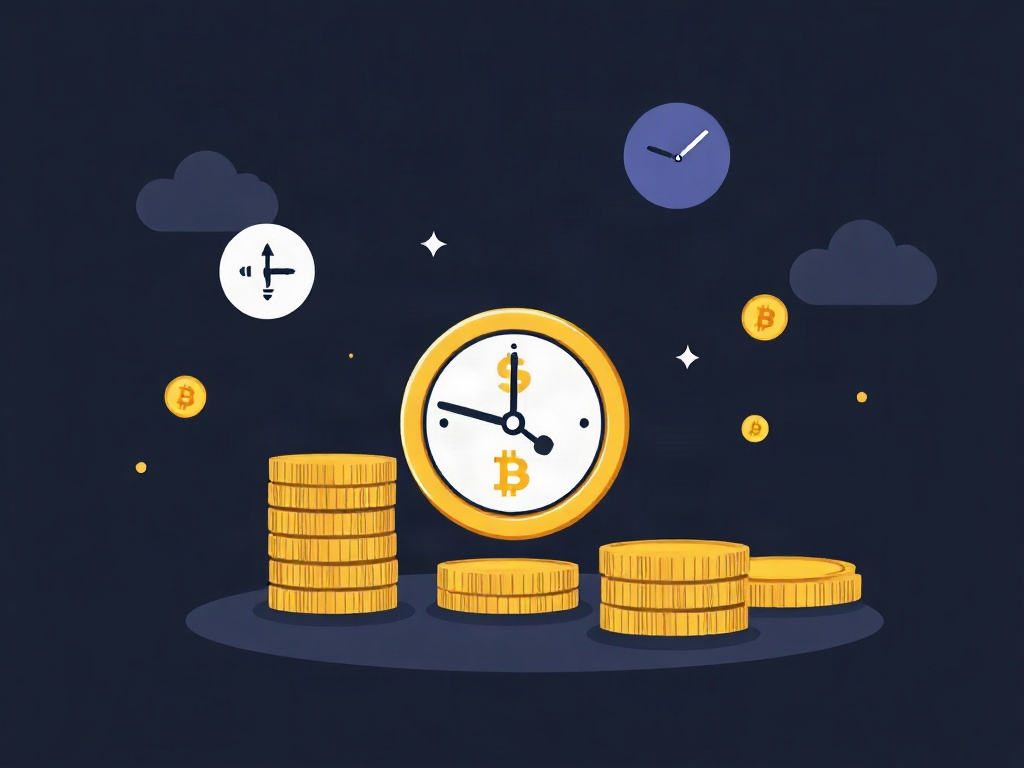
The time-delay withdrawal option is a specialized feature integrated into cryptocurrency mixing platforms that allows users to specify a custom waiting period before their mixed funds are released to the designated output address. Unlike standard mixing operations where transactions may be processed within hours, this option empowers users to extend the delay anywhere from several hours to multiple days, depending on the service provider's parameters.
At its core, the concept addresses a fundamental weakness in basic mixing protocols: temporal correlation. Even when funds are successfully mixed across multiple addresses, blockchain analysts can sometimes identify patterns based on transaction timing. If a deposit enters a mixing pool and an equivalent amount exits shortly after, sophisticated tracking algorithms can flag this relationship. The time-delay withdrawal option effectively neutralizes this vulnerability by introducing randomized or user-controlled intervals that make temporal correlation virtually impossible.
How the Mechanism Works in Practice
When a user initiates a mixing transaction with the time-delay withdrawal option enabled, the process unfolds in several distinct stages:
- Deposit Initiation: The user sends their cryptocurrency to the mixing service's deposit address, specifying their desired output address and the preferred delay duration.
- Pooling Phase: The funds enter the service's liquidity pool, where they are combined with transactions from numerous other users across various timeframes.
- Delay Period: The system holds the funds for the specified duration, during which additional deposits accumulate and previous withdrawals process, further obfuscating the origin.
- Randomized Release: Upon completion of the delay, the service releases the funds to the user's specified address, often with additional randomization to prevent pattern recognition.
- Confirmation and Completion: The transaction receives blockchain confirmation, completing the mixing process with significantly enhanced privacy guarantees.
This multi-stage approach transforms a simple transfer into a complex, time-distributed operation that bears no obvious relationship to the original deposit transaction.
The Strategic Importance of Transaction Timing
Understanding why timing matters requires a brief examination of how blockchain analysis operates. Companies and agencies that track cryptocurrency transactions employ sophisticated heuristics that examine multiple data points simultaneously. While address clustering and amount-based analysis receive considerable attention, temporal analysis represents an equally potent tracking vector.
Why Blockchain Analysts Focus on Timing
Blockchain explorers and analytics platforms maintain comprehensive databases that record the exact timestamp of every transaction ever broadcast to the network. When investigators attempt to trace funds through a mixing service, they often search for transactions with matching amounts that occur within narrow time windows. A deposit of 1.234 BTC followed by a withdrawal of 1.234 BTC within hours creates a strong probabilistic link, even when the addresses involved are completely different.
The time-delay withdrawal option specifically targets this analytical weakness. By introducing delays that range from several hours to multiple days, the feature ensures that any temporal correlation attempts must examine vastly larger datasets, dramatically reducing the probability of successful identification.
Combining Time-Delay with Other Privacy Techniques
Experienced users understand that maximum privacy requires a layered approach. The time-delay withdrawal option is most effective when combined with complementary privacy strategies:
- Multiple Output Addresses: Distributing mixed funds across several destination addresses rather than a single output prevents amount-based clustering attacks.
- Variable Amount Withdrawal: Requesting slightly different output amounts than the original deposit eliminates value-matching heuristics.
- Sequential Mixing: Routing funds through multiple mixing services with different delay settings creates compounding anonymity.
- Tor or VPN Integration: Masking the IP address associated with the mixing transaction prevents network-level correlation.
When these techniques are layered with the time-delay withdrawal option, users achieve privacy protection that approaches the theoretical maximum achievable within the constraints of public blockchain architecture.
Benefits and Advantages of Using Time-Delay Withdrawals
The implementation of a time-delay withdrawal option provides numerous tangible benefits that extend beyond simple privacy enhancement. Understanding these advantages helps users make informed decisions about when and how to employ this feature.
Enhanced Resistance to Blockchain Analysis
The primary benefit of time-delay functionality lies in its ability to defeat temporal analysis techniques. By extending the interval between deposit and withdrawal, users create an expanded window during which the mixing pool accumulates additional transactions. This larger pool makes it statistically improbable for any specific withdrawal to be linked to any specific deposit, even when using advanced chain analysis tools.
Research has demonstrated that mixing services employing random delays between transactions provide privacy guarantees that scale logarithmically with the number of participants in the pool during the delay window. A 24-hour delay typically results in exponentially greater privacy than immediate withdrawal, simply because more transactions enter and exit the pool during that period.
Protection Against Real-Time Surveillance
For users who face heightened surveillance risks, such as individuals in regions with restrictive financial monitoring or those handling sensitive transactions, the time-delay withdrawal option provides crucial protection against real-time tracking. Even if an adversary monitors blockchain activity continuously, the delay ensures that by the time the withdrawal occurs, the connection to the original deposit has been thoroughly obscured.
Flexibility and User Control
Modern mixing services that offer the time-delay withdrawal option typically provide users with significant flexibility in configuring their delay parameters. Some platforms offer preset options ranging from a few hours to several days, while others allow fully customized delays. This flexibility enables users to calibrate their privacy settings based on their specific threat models and operational requirements.
Reduced Risk of Pool Fingerprinting
Blockchain analysts sometimes identify mixing services by recognizing the pattern of funds entering and exiting known pool addresses. The time-delay withdrawal option disrupts this fingerprinting by introducing variable delays that make pool participation patterns less predictable and harder to characterize.
Potential Limitations and Considerations
While the time-delay withdrawal option offers substantial privacy benefits, responsible users must also understand its limitations and the considerations that come with its use. Transparency about these factors enables informed decision-making and helps users avoid potential pitfalls.
Opportunity Cost and Liquidity Concerns
Perhaps the most significant trade-off associated with time-delay functionality is the opportunity cost of locked funds. When users select longer delays, their capital remains inaccessible for the duration of the waiting period. For active traders or businesses requiring immediate liquidity, this constraint may prove impractical. Users must balance their privacy requirements against their operational liquidity needs, often reserving time-delayed mixing for larger transactions where privacy benefits justify the temporary lockup.
Service Trust Requirements
Implementing the time-delay withdrawal option inherently requires trusting the mixing service to custody funds throughout the delay period. This trust requirement is not unique to delayed withdrawals, but the extended timeframe does amplify the importance of selecting reputable, established service providers with proven track records. Users should thoroughly research any platform before committing significant funds, examining factors such as operational history, user reviews, security practices, and transparency reports.
Fee Structure Variations
Many mixing services adjust their fee structures based on selected delay durations. Longer delays sometimes incur higher fees to compensate the service for the extended custody period and the additional computational resources required to manage time-locked transactions. Users should carefully review fee schedules before configuring their preferred delay settings to ensure cost-effectiveness aligns with their privacy objectives.
Regulatory Considerations
The regulatory landscape surrounding cryptocurrency mixing services continues to evolve, with various jurisdictions implementing different approaches to oversight and compliance. Users should remain aware of their local regulatory environment and ensure that their use of the time-delay withdrawal option and mixing services generally complies with applicable laws. Privacy is a legitimate concern, but operating within legal frameworks protects users from potential complications.
Best Practices for Maximizing Privacy with Time-Delay Withdrawals
Achieving optimal results with the time-delay withdrawal option requires more than simply selecting the longest available delay. Strategic implementation, combined with disciplined operational security practices, maximizes the privacy benefits while minimizing associated risks.
Selecting Appropriate Delay Durations
The optimal delay duration depends on several factors, including transaction size, pool liquidity, and specific threat model considerations. For smaller transactions, shorter delays may provide sufficient privacy given the larger relative pool participation. For substantial transactions, longer delays offer enhanced protection. A useful heuristic involves selecting delays that allow the pool to process at least 50-100 additional transactions during the waiting period.
Maintaining Operational Security
Technical privacy measures provide limited value when operational security is compromised. Users employing the time-delay withdrawal option should implement robust OpSec practices, including:
- Using dedicated clean wallet addresses with no transaction history linking to the user's identity
- Accessing mixing services exclusively through privacy-preserving networks such as Tor
- Avoiding any communication that links the deposit address to the withdrawal address
- Maintaining strict separation between mixing activities and any identified wallets or exchanges
- Using unique addresses for each mixing operation to prevent inadvertent linkage
Timing Considerations for Optimal Anonymity
Strategic timing of the initial deposit can enhance the effectiveness of the time-delay withdrawal option. Depositing during periods of high platform activity ensures a larger pool of co-mingled funds, strengthening the anonymity set. Conversely, depositing during low-activity periods provides weaker privacy guarantees regardless of the selected delay duration. Users familiar with platform usage patterns can optimize their timing accordingly.
Documentation and Record Keeping
Despite the privacy-focused nature of mixing activities, maintaining personal records of transactions, delays selected, and associated fees serves important practical purposes. These records assist with tax compliance, financial planning, and troubleshooting any service issues that may arise. Users should store such records securely using encrypted storage solutions, maintaining separation between personal identification and mixing transaction details.
The Future of Time-Delay Privacy Features
As blockchain analysis techniques continue to evolve, privacy-enhancing features like the time-delay withdrawal option are likely to become increasingly sophisticated. Emerging developments in this space promise even stronger privacy guarantees while addressing some current limitations.
Integration with Advanced Cryptographic Techniques
Future iterations of time-delay functionality may incorporate advanced cryptographic primitives such as zero-knowledge proofs and confidential transactions. These integrations could enable mixing services to prove the validity of transactions without revealing specific amounts, times, or addresses, fundamentally transforming the privacy landscape. The combination of time delays with these cryptographic advances promises unprecedented anonymity for digital currency users.
Decentralized Mixing Protocols
The current generation of mixing services largely relies on centralized architectures, which inherently require trust in the operating entity. Emerging decentralized mixing protocols aim to eliminate this trust requirement through cryptographic guarantees and distributed coordination. The time-delay withdrawal option will likely feature prominently in these next-generation protocols, providing users with self-sovereign privacy tools that operate without custodial risk.
Adaptive Delay Algorithms
Researchers are exploring adaptive delay algorithms that automatically optimize delay durations based on real-time pool conditions, network activity, and detected surveillance patterns. These intelligent systems would remove much of the guesswork from configuring the time-delay withdrawal option, enabling users to achieve optimal privacy with minimal technical expertise.
Conclusion: Making Informed Decisions About Transaction Privacy
The time-delay withdrawal option represents a powerful tool in the cryptocurrency privacy toolkit, offering users meaningful control over the temporal dimension of their financial transactions. By disrupting the timing patterns that blockchain analysts exploit, this feature adds a critical layer of protection that complements other privacy strategies and significantly enhances overall anonymity.
Successful implementation requires understanding both the capabilities and limitations of time-delay functionality. Users must balance privacy benefits against practical considerations such as opportunity costs, service trust requirements, and regulatory compliance. When combined with disciplined operational security practices and complementary privacy techniques, the time-delay withdrawal option provides robust protection that serves users across a wide range of privacy requirements.
As the cryptocurrency ecosystem continues to mature, features like time-delay withdrawals will play an increasingly important role in preserving the financial privacy that many users consider essential. By understanding how these tools work and implementing them strategically, users can navigate the digital currency landscape with greater confidence and security, maintaining control over their financial information in an era of expanding surveillance capabilities.
Whether you are taking your first steps toward enhanced transaction privacy or seeking to refine an existing privacy strategy, the time-delay withdrawal option deserves serious consideration as a foundational element of your approach to financial confidentiality in the digital age.
Evaluating the Time-Delay Withdrawal Option: A Blockchain Security Perspective
As someone who has spent the better part of a decade analyzing smart contract architectures and tokenomic frameworks, I find the time-delay withdrawal option to be one of the more underappreciated safety mechanisms in decentralized finance. At its core, this feature introduces a mandatory waiting period between a withdrawal request and actual fund release, creating a buffer window during which suspicious activity can be identified, challenged, or reversed by governance mechanisms. This is not merely a UX inconvenience—it is a deliberate architectural choice that addresses some of the most pressing vulnerabilities we have observed across DeFi protocols, including flash loan exploits and rapid-drain attack vectors.
From a practical implementation standpoint, the time-delay withdrawal option serves multiple stakeholders simultaneously. For individual users, it provides a psychological and operational checkpoint that reduces the likelihood of impulsive decisions made under social engineering pressure. For protocol governance teams and multi-signature custodians, it offers critical reaction time to coordinate responses when anomalies are detected. The trade-off, of course, is liquidity efficiency—users accustomed to instant settlement may find even short delays friction-inducing. However, I have consistently advised clients that for treasury management, staking unstaking procedures, and any function involving substantial capital flows, the security benefits of delayed withdrawals substantially outweigh the convenience costs. The key is calibrating the delay duration to match the asset value at risk; a 24-hour window for routine operations may be appropriate, while large treasury movements warrant 72-hour or even week-long review periods.
Looking at cross-chain interoperability specifically, the time-delay withdrawal option becomes even more strategically valuable. Bridging assets between chains introduces additional trust assumptions and attack surfaces, and a withdrawal delay on the destination chain provides a meaningful safeguard against coordinated cross-chain exploits that have become increasingly sophisticated. My recommendation to any protocol considering this mechanism is to implement it alongside transparent monitoring dashboards and clearly communicated delay parameters, ensuring users understand both the protective rationale and the expected timelines. When designed thoughtfully, this feature transforms from a perceived limitation into a competitive differentiator that signals institutional-grade security maturity.