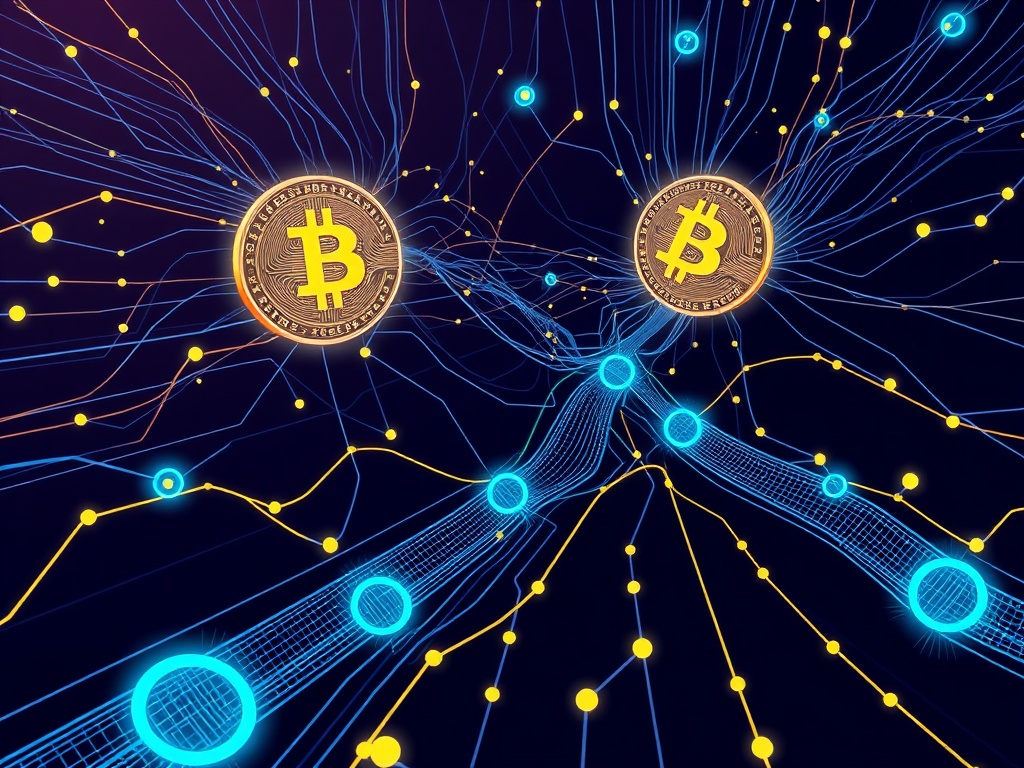
In the rapidly evolving world of cryptocurrency, tracking the movement of digital assets has become a critical component of blockchain analysis. One of the most sophisticated tools used in this domain is token flow attribution, a method that allows analysts to trace the origin, path, and destination of cryptocurrency transactions. This technique plays a pivotal role in ensuring transparency, compliance, and security within the decentralized financial ecosystem. As regulatory scrutiny intensifies and the demand for traceable transactions grows, understanding how token flow attribution works is essential for businesses, investors, and blockchain developers alike.
The Fundamentals of Token Flow Attribution
Token flow attribution refers to the process of identifying and mapping the movement of digital tokens across blockchain networks. Unlike traditional financial systems, where transaction trails are easily traceable through centralized ledgers, blockchain transactions are pseudonymous and often involve multiple intermediaries. This complexity necessitates advanced analytical tools to determine the source and destination of funds, especially in cases involving money laundering, fraud, or regulatory investigations.
How Token Flow Attribution Works
At its core, token flow attribution relies on blockchain analytics to track the movement of cryptocurrency from one wallet to another. Analysts use a combination of on-chain data, transaction graphs, and behavioral patterns to reconstruct the flow of tokens. By analyzing transaction timestamps, wallet addresses, and interaction patterns, experts can determine whether a particular token originated from a legitimate source or was involved in illicit activities.
One of the key components of this process is cluster analysis, which groups together wallet addresses that are likely controlled by the same entity. This is achieved by identifying common transaction patterns, such as frequent transfers between addresses or shared input/outputs in transactions. Once clusters are formed, analysts can attribute the flow of tokens to specific entities, providing valuable insights into the ownership and usage of digital assets.
Tools and Technologies Behind Token Flow Attribution
Several blockchain analytics platforms, such as Chainalysis, Elliptic, and CipherTrace, utilize advanced algorithms to perform token flow attribution. These tools leverage machine learning and graph theory to map transaction networks and detect suspicious patterns. By integrating data from multiple blockchain explorers and external sources, these platforms offer a comprehensive view of token movements across different networks.
Another critical aspect of token flow attribution is transaction tracing, which involves following the path of a specific token from its initial issuance to its final destination. This process is particularly important in forensic investigations, where law enforcement agencies seek to trace the movement of stolen or illicitly obtained funds. By reconstructing the transaction history of a particular token, investigators can identify the parties involved and potentially recover lost assets.
The Role of Token Flow Attribution in Compliance and Regulatory Reporting
As governments around the world implement stricter regulations on cryptocurrency transactions, the need for accurate and reliable token flow attribution has never been greater. Financial institutions, exchanges, and wallet providers are required to comply with anti-money laundering (AML) and know-your-customer (KYC) regulations, which mandate the monitoring and reporting of suspicious transactions.
Token Flow Attribution in AML/KYC Compliance
Token flow attribution plays a crucial role in AML/KYC compliance by enabling organizations to identify high-risk transactions and flag potential red flags. For example, if a wallet address is known to be associated with criminal activity, any transaction involving that address can be flagged for further investigation. By leveraging token flow attribution, compliance teams can proactively detect and prevent illicit financial activities.
Moreover, regulatory bodies such as the Financial Action Task Force (FATF) have issued guidelines that require cryptocurrency service providers to implement robust transaction monitoring systems. Token flow attribution provides the necessary data to meet these requirements, ensuring that businesses remain compliant while maintaining the integrity of their operations.
Enhancing Transparency in Decentralized Finance (DeFi)
The rise of decentralized finance (DeFi) has introduced new challenges in tracking token flows due to the complex and interconnected nature of smart contracts. Token flow attribution helps address these challenges by providing visibility into the movement of assets across DeFi protocols. By analyzing smart contract interactions and token transfers, analysts can determine the origin and destination of funds, even in highly automated and permissionless environments.
This level of transparency is particularly important for DeFi platforms that aim to build trust with users and regulators. By demonstrating that they have effective token flow attribution mechanisms in place, DeFi projects can enhance their credibility and attract institutional investors who prioritize compliance and security.
Token Flow Attribution in Fraud Detection and Risk Management
Fraudulent activities in the cryptocurrency space often involve the manipulation of token flows to obscure the true source of funds. Token flow attribution serves as a powerful tool for detecting and mitigating such risks by identifying unusual transaction patterns and anomalies.
Detecting Money Laundering and Illicit Transactions
Money laundering in the cryptocurrency ecosystem typically involves multiple stages, including placement, layering, and integration. Token flow attribution helps break down these stages by tracing the movement of funds through various wallets and exchanges. By identifying patterns such as rapid transfers between multiple addresses or the use of mixing services, analysts can detect potential money laundering schemes and report them to the appropriate authorities.
Additionally, token flow attribution can be used to monitor the activity of sanctioned entities. By cross-referencing blockchain data with sanctions lists, compliance teams can ensure that their platforms are not facilitating transactions with restricted parties. This proactive approach not only reduces legal risks but also enhances the overall security of the platform.
Preventing Double-Spending and Double-Counting
Another critical application of token flow attribution is in preventing double-spending and double-counting of tokens. In a decentralized network, it is possible for malicious actors to attempt to spend the same token multiple times by exploiting vulnerabilities in the consensus mechanism. Token flow attribution helps detect such attempts by analyzing the transaction history and identifying conflicting transactions.
By cross-referencing transaction data with the blockchain ledger, analysts can verify the validity of each transaction and ensure that tokens are not being double-spent. This is particularly important for platforms that issue their own tokens or operate on custom blockchain networks, where the risk of double-spending is higher due to the lack of a centralized authority.
Challenges and Limitations of Token Flow Attribution
Despite its many benefits, token flow attribution is not without its challenges. The pseudonymous nature of blockchain transactions, the use of privacy-enhancing technologies, and the rapid evolution of blockchain networks all pose significant obstacles to accurate attribution.
Addressing Privacy Concerns and Anonymity
One of the primary challenges in token flow attribution is the use of privacy-focused cryptocurrencies such as Monero and Zcash. These currencies employ advanced cryptographic techniques to obfuscate transaction details, making it difficult to trace the flow of funds. While token flow attribution tools can still analyze on-chain data, they may struggle to provide definitive attribution in cases involving highly private transactions.
To address this issue, some platforms are exploring hybrid approaches that combine on-chain and off-chain data to enhance attribution accuracy. By integrating identity verification mechanisms and leveraging external data sources, analysts can improve their ability to trace transactions even in privacy-centric environments.
Scalability and Data Complexity
As blockchain networks grow in size and complexity, the volume of transaction data increases exponentially. This presents a significant challenge for token flow attribution, as analyzing vast amounts of data in real time requires substantial computational resources. Additionally, the interoperability of different blockchain networks further complicates the process, as tokens may move across multiple chains with varying consensus mechanisms and data structures.
To overcome these challenges, blockchain analytics firms are investing in scalable infrastructure and advanced data processing techniques. By leveraging distributed computing and machine learning algorithms, they aim to improve the efficiency and accuracy of token flow attribution, even in high-volume environments.
Future Trends and Innovations in Token Flow Attribution
The field of token flow attribution is continuously evolving, driven by advancements in blockchain technology and increasing regulatory demands. As the cryptocurrency ecosystem matures, new tools and methodologies are being developed to enhance the accuracy and efficiency of token flow analysis.
Integration with Artificial Intelligence and Machine Learning
Artificial intelligence (AI) and machine learning (ML) are playing an increasingly important role in token flow attribution. By analyzing large datasets and identifying patterns that may not be immediately apparent to human analysts, AI-powered tools can enhance the accuracy of attribution and reduce the risk of false positives.
For example, ML algorithms can be trained to recognize subtle indicators of fraudulent activity, such as unusual transaction frequencies or the use of specific wallet addresses. By continuously learning from new data, these systems can adapt to emerging threats and improve their ability to detect suspicious transactions in real time.
The Impact of Regulatory Developments
Regulatory developments are also shaping the future of token flow attribution. As governments and financial institutions push for greater transparency in the cryptocurrency space, the demand for robust attribution tools is expected to grow. New regulations may require platforms to implement more stringent monitoring and reporting mechanisms, further driving the adoption of token flow attribution technologies.
At the same time, regulatory clarity could lead to the development of standardized attribution frameworks that facilitate cross-border compliance. By establishing common guidelines for token flow analysis, regulators can ensure that all market participants adhere to the same standards, promoting a more secure and transparent cryptocurrency ecosystem.
Conclusion: The Importance of Token Flow Attribution in the Cryptocurrency Ecosystem
Token flow attribution is a vital component of the modern cryptocurrency landscape, enabling businesses, regulators, and security professionals to track and analyze the movement of digital assets. By providing insights into transaction patterns, identifying potential risks, and supporting compliance efforts, this technique plays a crucial role in maintaining the integrity of the blockchain ecosystem.
As the industry continues to evolve, the importance of token flow attribution will only increase. With advancements in AI, machine learning, and blockchain analytics, the future of token flow attribution looks promising. By embracing these technologies and staying ahead of regulatory developments, stakeholders can ensure that they are well-equipped to navigate the complexities of the digital asset space.
Token Flow Attribution: Mapping the Invisible Currents of Blockchain Economies
As Blockchain Research Director at a leading fintech consultancy, I’ve spent years dissecting the complexities of distributed ledger systems. One concept that continues to evolve—and challenge traditional financial modeling—is token flow attribution. This process involves tracing the movement and usage of digital assets across decentralized networks, a task that’s as critical as it is nuanced. Unlike traditional finance, where transaction trails are centralized and easily auditable, blockchain ecosystems demand a paradigm shift in how we track value. Token flow attribution isn’t just about following the money; it’s about understanding the intent, utility, and lifecycle of tokens within smart contracts, cross-chain bridges, and decentralized applications (dApps).
From a practical standpoint, token flow attribution is indispensable for regulatory compliance, risk assessment, and optimizing tokenomics. For instance, when advising clients on cross-chain interoperability solutions, I emphasize the need to map token trajectories to prevent regulatory arbitrage and ensure transparent reporting. Consider a DeFi protocol migrating assets between Ethereum and a Layer 2 network: without precise attribution, liquidity pools could become opaque, exposing users to unquantified risks. My team recently developed a framework that integrates on-chain analytics with off-chain metadata to enhance attribution accuracy—a solution now being piloted by several institutional investors. This work underscores the importance of marrying technical rigor with regulatory foresight.
Looking ahead, the future of token flow attribution hinges on advancements in zero-knowledge proofs and AI-driven analytics. These tools could enable real-time, privacy-preserving tracking of token movements without compromising user anonymity—a balance that’s vital for mainstream adoption. However, challenges remain. Fragmented standards across blockchains and the proliferation of synthetic assets complicate attribution efforts. As someone deeply involved in smart contract security, I advocate for industry-wide collaboration to establish unified protocols. By treating token flow attribution as both a technical and governance imperative, we can unlock the full potential of decentralized economies while mitigating systemic risks. The journey is complex, but the stakes for innovation—and accountability—are too high to ignore.